
Molecular Hydrogen

Molecular Hydrogen Gas

6 Reasons Molecular Hydrogen Gas Can Help With Health/Healing:

  1. Hydrogen is the smallest molecule on earth: crosses the BBB, not limited to just the blood, can get into brain.
  2. Highly Intelligent : goes to areas of highest inflammation, only removes toxins.
  3. Increased NRF2 gene: turns 200 detox genes on.
  4. Immune System: turns on natural killer cells.
  5. Mitogenesis: makes new mitochondria cells.
  6. Cleans up Mitochondria- cleans up and improves existing mitochondria, turns on the body to do repair.

All of the amazing research done on hydrogen is not drinking it, but inhaling it. Drinking hydrogen water has some benefits for the digestion, but it’s too small of a dose to get the researched results. You breathe 11,000 liters of air per day, you can’t replace that in a drink, which is why the top six benefits are only based on inhaling hydrogen gas. The effectiveness of hydrogen is dependent on reaching a sufficient concentration of H₂ in cells. This also depends individually on respiration dynamics for that person.

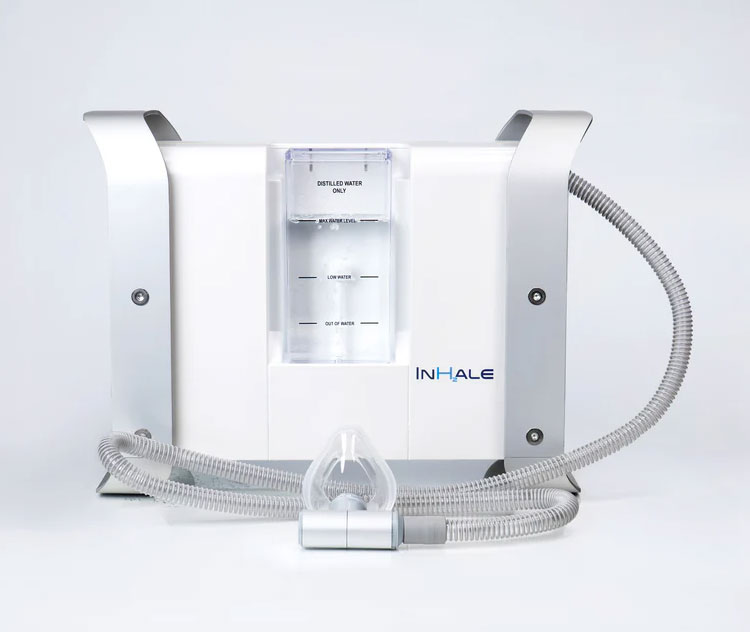
The only system built to deliver the right dose of hydrogen with every breath—consistently, safely, and with precision is the InHale H2.

  • Precision-Tuned for the Human Body
    Delivers a targeted hydrogen concentration with every breath, mimicking natural breathing patterns for optimal absorption.
  • More Efficient Than High-Flow Systems
    Achieves therapeutic effects with just 480 mL of hydrogen per minute—whereas constant-flow machines may require over 7 L/min to match results.
  • Superior Safety Profile
    Designed for peace of mind—no explosion risks, unlike high-output machines that pose serious safety hazards at industrial flow levels.
  • Cost-Effective Performance
    Engineered for efficiency, offering clinical-grade benefits without the high cost or complexity of hydroxy gas generators.

What does Therapeutic Dose Mean With Hydrogen Inhalation?

The therapeutic effectiveness of hydrogen is dependent on reaching a sufficient concentration of H₂ in cells. Based on leading research, a minimum intracellular H₂ concentration of approximately 5–10 µM is suggested for biological effects to occur. This corresponds to an FiH₂ of at least 1%.
  • FiH₂ below 1% may not consistently achieve intracellular concentrations necessary for therapeutic effects.
  • Higher FiH₂ concentrations (e.g., 2-4%) can more reliably elevate tissue H₂ levels within the therapeutic range.
  • Exceeding 4% FiH₂ is sometimes not as therapeutic and it introduces critical, flammability concerns.
Inhale H₂ is designed to deliver safe, effective hydrogen inhalation by keeping FiH₂ below 4%—the safety threshold followed by hospitals, clinics, and research institutions. This ensures therapeutic benefit while avoiding risks like hypoxia or flammability, and meets strict safety and regulatory standards for consistent, reliable use. Going above certain levels of the gas has safety risks, which is why at Imprint Health we researched the safest machine out there which uses an inflatable reservoir system and one-way mask ensuring stable FiH₂. This has a controlled flow rate achieving adequate amounts for promoting wellness, but also mitigating safety concerns. For all research on molecular hydrogen for specific conditions relating to cancer, bones, brain, heart and much more go to: www.molecularhydrogeninstitute.org